
Lehigh360 at Lehigh University
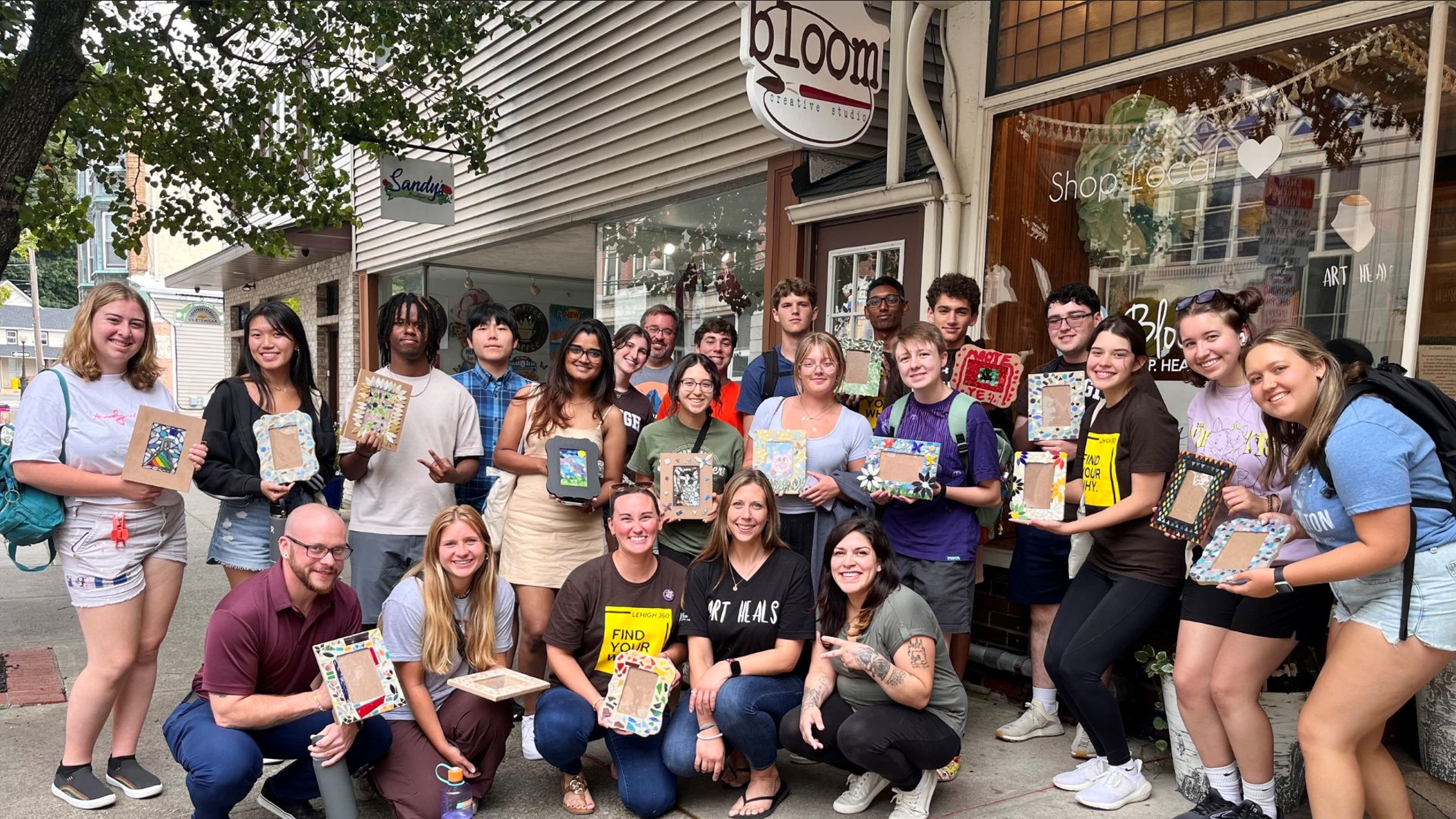
Lehigh360 is a university-wide initiative that helps students discover and make the most of high-impact learning practices (HILPs) across campus. The primary component of Lehigh360, in addition to advising and support, is a searchable database that aggregates and organizes potential HILPs for students to explore their purpose and find ways of living it out in college.
Research shows HILPs, including research, study abroad, internships, peer mentoring, and more, can help boost academic success, deepen student-faculty relationships, and strengthen long-term career outcomes, civic engagement, and ethical reasoning. The goal of Lehigh360 is to ensure all students have equal knowledge of and access to the experiences that stand to most transform both their education and life beyond.
Problem / Rationale
The benefits of high-impact learning practices are well-documented for academic performance, personal development, life-long career success, and more. For many years at Lehigh, there was consensus among faculty and staff that these experiences were important to best prepare students for educational and professional attainment. And yet, not all Lehigh students were always accessing these opportunities as much as hoped.
In 2015, the National Survey of Student Engagement found that among Lehigh's first-year students, far fewer had participated in two or more high-impact practices (HIPs) than at peer institutions. Moreover, Lehigh's first-years scored below peer institutions on participation in learning communities and community-based coursework. That said, by senior year, Lehigh students caught up and even exceeded peer institutions on HIP participation, revealing that opportunities existed but many students were not finding them early enough.
Lehigh360 emerged from the university’s recognition of this “engagement gap” and the need to democratize high-impact opportunities for all students. Specifically, a team from Lehigh’s Office of Creative Inquiry (OCI) set out to identify and address the barriers most preventing students from pursuing HIPs. The issues discovered included, among others, a critical lack of knowledge among students about what HIPs were available, a lack of the cultural capital to see such experiences as attainable, and a lack of time given competing academic and social demands. Meanwhile, information about opportunities was scattered across dozens of offices and outdated or incomplete web pages, and no single place existed for students, families, or advisors to see the full landscape of what Lehigh offered.
Lehigh360 would sort through the disorganization needlessly barring students from life-changing experiences. Even more broadly, it would champion a shift away from a more transactional view of education and towards one centered on purpose, identity, and lifelong learning. Lehigh360 wouldn’t just ask students, “What organization do you want to work for?” It would push them to consider, "What problems do you want to solve?"
How It Works
Lehigh360 is organized around three interconnected aims:
- Find Their Why — for students to reflect on their passions, strengths, and values, and on what problems in the world they want to help solve, before they narrow in on any particular opportunity.
- Connect Passions to Possibilities — for students to explore and intentionally participate in Lehigh's signature high-impact programs, finding them via the Lehigh360 database and wider support network (described below)
- Build Outcome-Focused Portfolios — for students to document how their experiences have shaped their personal transformation and professional growth, capturing outcomes that prepare them for jobs, fellowships, graduate programs, and entrepreneurial ventures.
Program Areas and Offerings
Lehigh360 organizes Lehigh's high-impact opportunities into nine categories, each of which includes a set of specific programs available to students. These categories, and their programs, include:
- Peer Mentoring (10 programs) — including TRAC Writing Fellows, LUSSI Student Guides, Mentor Collective, Rossin Junior Fellows, Orientation Leaders, Camp Hawk Counselors, Peer Health Advisors, Break the Silence Peer Educators, CCPD Career Fellows, and Med Mentors
- Creative Inquiry (6 programs) — including the Global, Lehigh Valley, Campus, and Silicon Valley Social Impact Fellowships, the Mountaintop Summer Experience, and the NextGen Pathways to Transformative Impact Fellowship
- Entrepreneurship (6 programs) — including the Eureka! Venture Program, The Hatchery, Lehigh Ventures Lab, Startup Academy, LehighSiliconValley, and the Innovation Internship
- Global & Cross-Cultural (6 programs) — including the Global Citizenship Program, Global Village, the Iacocca International Internship Program, Study Abroad, the UN Youth Representative Program, and the Global Business Immersion Program
- Research (6 programs) — including the Rapidly Accelerated Research Experience, Martindale Student Associates, the STEM Summer Institute, Clare Boothe Luce Research Scholars, Rossin Research Scholars, and Faculty-Led Research
- Leadership Development (5 programs) — including the Gryphon Society, Flight 45 Athletics Leadership, Student Senate, the Eco-Rep Leadership Program, and ROTC
- Work-Integrated Learning (4 programs) — including Internships, the OIA Summer Fellowship Program, Capstone Projects, and Campus & Work Study Internships
- Arts (3 programs) — including the Lehigh University Art Gallery Lab, Theatre Productions, and Music Ensembles
- Community Engagement (3 programs) — including Marcon Mountain Hawk Fellows, America Reads and Counts School Leaders, and Center for Gender Equity Reps
In total, there are close to 50 programs, and the database continues to grow as more offices bring their programs into the system.
How Students Find Opportunities
The primary discovery tool is Lehigh360's searchable online database, launched in October 2023, which lets students filter and query programs by category, keyword, theme, or deadline rather than hunting across dozens of separate department websites. Programs are tagged with specific themes. For example, an internship might be tagged with sustainable development, public health, and a specific region. That way, students can search by their interests rather than only by program type. The database also centralizes funding and deadline information that was previously scattered or outdated across individual program pages.
Beyond the database itself, Lehigh360 is introduced to students well before they take a single class: A pre-orientation program called "preLUsion" gives incoming first-years an early introduction to shared-interest projects and campus connections. Once on campus, students encounter Lehigh360 again through first-year course presentations, academic advising conversations, and other student-facing touchpoints throughout their four years. The goal is to catch students early, as opposed to waiting until they stumble onto a program on their own.
Because cost and lost income are major barriers to participation, discovering an opportunity also means discovering how to afford it. Lehigh360 offers several financial support pathways alongside its program listings:
- Soaring Together Scholars, which pairs a full-tuition scholarship with a $5,000 stipend earmarked specifically for pursuing an experiential learning opportunity;
- Connections to funding sources, where Lehigh360 staff help students identify and apply for scholarships, grants, and program-specific funding they might not otherwise know about;
- Paid internship placements for students who cannot afford to give up part-time employment to take on an unpaid opportunity, aiming to break the either/or choice between financial security and high-impact experience.
Who Helps Students Along the Way
Lehigh360 pairs its digital tools with a layered human support network to help students explore, secure, and reflect on opportunities:
- Lehigh360 staff — Program Manager Michelle Spada and Assistant Vice Provost Bill Whitney offer direct advising and provide guidance on navigating competitive applications and identifying the right program at the right stage of a student's Lehigh career.
- Student opportunity guides — peer mentors with direct experience in high-impact programs hold regular office hours to help fellow students with applications, essays, and references, and to share firsthand insight into what a given experience is actually like.
- Academic advisors and faculty — equipped with the same centralized information as Lehigh360 staff so that a student's access to opportunities does not depend on which advisor or department they happen to be assigned to.
Outcome Recognition
Since 2025, the culmination of Lehigh360 has involved a program called the Future Makers Society and its annual Future Makers Convocation. The Society honors undergraduate students whose work demonstrates externally validated outcomes, including having advanced knowledge (e.g., published publications or invited talks); advanced praxis (e.g., marketed products or showcased creative works); delivered societal impact (e.g., sustainable community impact or social entrepreneurship outcomes); and received professional recognition (e.g., prestigious external scholarships, fellowships, or competitive awards). The event deliberately recognizes accomplishments that a traditional academic honors convocation would not capture in an effort to shift campus culture toward a broader definition of student success, and to showcase the portfolios students have built through engagement with Lehigh360.
How It Was Implemented
Lehigh360's roots trace to a December 2017 concept paper from the OCI, titled "A Coordinated Systemic Approach to Connect Passions with Possibilities." The paper laid out the engagement-gap problem among Lehigh students in detail and proposed a solution that set the stage for Lehigh360 as it exists today. The answer, the paper suggested, would include a virtual space consolidating scattered HILP information into one website.
Still, ahead of any formal rollout, Bill Whitney, the assistant vice provost for experiential learning programs, and Khanjan Mehta, the vice provost for creative inquiry, set out to test the paper's core assumption: that students weren't finding their way to Lehigh's high-impact opportunities. Their informal but vast outreach to students and alumni about experiences like study abroad, leadership, and mentorship found that many hadn't participated, and many more simply didn't know the opportunities existed. That finding became the case for action. Whitney then spent time meeting with more than one hundred campus offices, department by department, to build support for a coordinated, campus-wide effort rather than a patchwork of disconnected programs.
That groundwork then translated into formal investment: Lehigh created a director-level position for the initiative, hiring Michelle Spada as program manager. From there, implementation widened to pull in stakeholders from across academic and student affairs identified in the original concept paper's mapping. The team appealed to the athletics department, the Center for Community Engagement, the Office of Economic Engagement, the Center for Career and Professional Development, and the Office of International Affairs, as well as several existing peer-to-peer and mentorship efforts. Rather than centralizing ownership of these programs under one office, Lehigh360 was implemented as a coordinating layer on top of work that continued to be led by the original departments and program staff.
With staff and stakeholders in place, the initiative's components came together in stages rather than all at once. The searchable online database — the clearest realization of the original "virtual space" concept — launched in October 2023, giving students a single place to filter opportunities by category, theme, and deadline. Around and after the database launch, Lehigh360 incorporated additional pieces: the pre-orientation program to introduce incoming first-years to the initiative, the network of student opportunity guides to support peers, and an e-portfolio structure meant to help students document their growth each semester, culminating in a final portfolio before graduation.
Lehigh360's staff have also begun exploring newer technology, including the launch of an AI chatbot in the Fall 2026 semester, and are investigating how a potential unified application process might extend the current model further. These automated tools would serve as a supplement to, rather than a replacement for, human advising, primarily out of concern that unequal access to technology could recreate the same inequities the initiative was built to close. Finally, the most recent add-on to Lehigh360, in November 2025, was the Future Makers Society and its annual convocation, giving the program's outcomes-and-recognition component a visible, campus-wide capstone.
Assessment & Evidence
As the initiative has matured, Lehigh360 has begun gathering more direct evidence of impact and reach. A student research team called "Impact Trails," part of Lehigh's Campus Social Impact Fellowship program, conducts qualitative research asking participating and non-participating students how they became involved in high-impact opportunities and what barriers kept others from doing so. (Conveniently, this research process also becomes a high-impact, experiential opportunity for the students conducting it.) Reporting on the initiative describes anecdotal but consistent signals of traction: Students increasingly describe checking the Lehigh360 database when considering opportunities; alumni have expressed wishing the resource existed during their own time at Lehigh; and faculty and administrators across campus have sought to have their programs included in the database.
Individual student outcomes further illustrate the kind of impact Lehigh360 has produced and continues to stove for. One student credited a Lehigh360 connection with a summer research and internship experience in Africa that shaped her subsequent path; another, a first-generation, funding-sensitive student, used Lehigh360 support to pursue a fully funded international internship in Uganda and a later position in Scotland, describing the experience as transformative for her confidence, worldview, and sense of teamwork. The Future Makers Society will continue requiring nominated students to document externally validated outcomes — such as citations in peer-reviewed publications, evidence of ventures or products in the marketplace, letters of support from community or industry partners, or competitive external awards — which will generate an ongoing record of the kinds of outcomes Lehigh360-connected experiences produce.
Scalability
Lehigh360's design was intentionally built to scale without requiring Lehigh to create or fund new experiential programs. Its key scalable components include:
- Aggregating rather than owning existing programs, so that dozens of pre-existing offerings across academic and student affairs can be surfaced through one common platform without disrupting their existing structures or leadership
- A searchable, centrally maintained database that can continually absorb new programs and opportunities as they are identified; they are simply tagged by category and theme for efficient student searching
- A layered advising and peer-mentoring network, including professional staff, student opportunity guides, and academic advisors, that distributes the work of connecting students to opportunities rather than relying on a single office
- Embedding outreach into existing student touchpoints — first-year courses, pre-orientation programming, and academic advising — so awareness-building does not depend on students seeking the program out on their own
- Dedicated equity-focused funding mechanisms, such as scholarship-and-stipend pairings, that can be expanded or replicated to reduce financial barriers to participation
- External partnerships and benchmarking with organizations such as the LearningWell Coalition, the Society for Experiential Education, and the Engagement Scholarship Consortium, which allow Lehigh360's model, including its approach to technology and equity, to be shared with and adapted by other institutions
Contact
More in Experiential Learning

BentleyPlus at Bentley University
BentleyPlus is a wellbeing initiative at Bentley University rooted in competency development. The program helps students develop 10 core competencies, including community exploration, problem solving, leadership, and wellbeing, through advising, reflection, and a range of co-curricular experiences. These skills and habits are designed to support career readiness while also fostering the identity, resilience, and sense […]
Bentley University
Engelhard Project for Connecting Life and Learning at Georgetown University
The Engelhard Project for Connecting Life and Learning at Georgetown University integrates health and wellbeing into the academic curriculum through a model of curriculum infusion, reflective pedagogy, and cross-campus partnership. Faculty across disciplines embed structured opportunities for reflection, dialogue, and engagement with wellbeing topics directly into their courses, in collaboration with campus resource professionals. Since […]
Georgetown University
UF Quest at University of Florida
UF Quest is the University of Florida’s signature core education program, a transformational, four-part sequence of interdisciplinary learning experiences that challenge students to wrestle with life’s most important questions, explore real-world issues through a scientific lens, apply their learning in the world, and reflect on how their education shapes who they are becoming.Grounded in a […]
University of Florida