
Work+ at Arizona State University
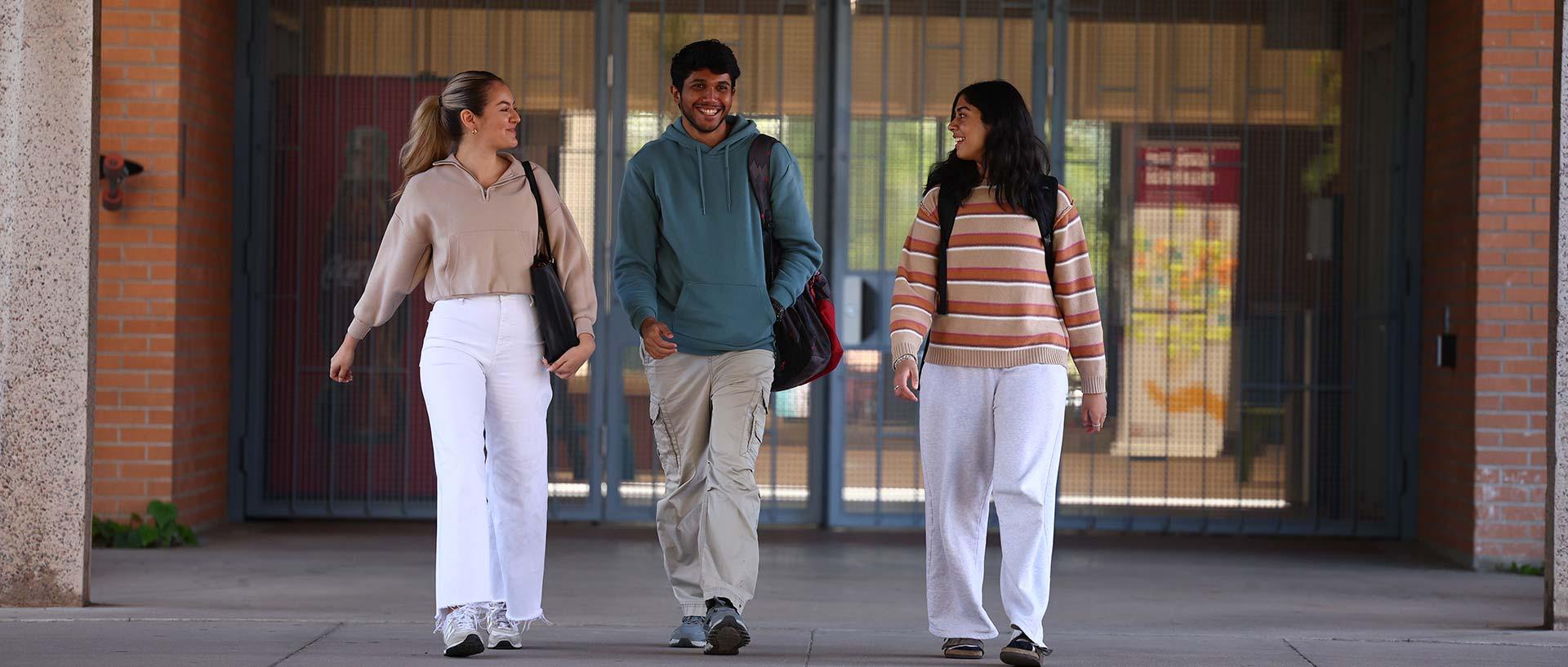
Arizona State University’s Work+ framework reimagines student employment as a high-impact, developmental learning experience that integrates work and learning. Rather than treating campus jobs as transactional, Work+ positions student employees as “working learners” and intentionally connects their roles to career readiness, skill development, and long-term goals.
Launched in 2020, Work+ expands access to experiential learning by leveraging one of the most widely available student experiences: on-campus employment. At ASU, where approximately 8,000 to 9,000 students participate in student employment annually, the Work+ framework ensures that these roles contribute meaningfully to student growth, persistence, and post-graduation success.
Problem and Rationale
Student employment is one of the most common experiences in higher education, yet it is often treated as transactional and disconnected from learning and career development. At ASU, thousands of students work while enrolled, many of whom are first-generation, lower-income, or balancing significant financial responsibilities.
Often, traditional high-impact practices such as internships are not accessible to all students at scale. As a result, many students lack structured opportunities to build career readiness, reflect on their experiences, and connect their work to future goals.
Work+ was developed to address this gap by transforming student employment into a meaningful, developmental experience that contributes to student success, persistence, and post-graduation outcomes.
How the Initiative Works
Work+ defines clear developmental outcomes for every student employment experience, including increased career readiness, stronger relationships with supervisors, and greater confidence in articulating transferable skills.
Students engage in structured professional development through a series of online modules and guided reflection activities that are intentionally designed to fit within the realities of student employment. These modules focus on helping students identify and name the skills they are building through their work, explore potential career pathways, and connect their day-to-day responsibilities to longer-term academic and professional goals. Reflection is a core component, prompting students to make meaning of their experiences rather than simply complete tasks.
A distinguishing feature of Work+ is the central role of supervisors. The model positions supervisors not only as managers, but as educators who actively support student learning and development. Through Supervisor Foundations training and ongoing resources, supervisors are equipped to integrate developmental practices into their regular interactions with student employees. This includes setting clear expectations, providing regular feedback, facilitating conversations about skill development and career goals, and creating opportunities for students to take on progressively more complex responsibilities.
The structure of Work+ is designed to be embedded within existing student employment roles rather than layered on as an additional program. Professional development is integrated into the flow of work through regular check-ins, feedback conversations, and opportunities for reflection, reducing the need for separate programming that competes with students’ time constraints.
At the institutional level, Work+ is supported by centralized infrastructure that enables consistency and scale. This includes standardized supervisor training, shared tools and resources, and data systems that track student participation, supervisor engagement, and developmental outcomes.
The initiative also includes mechanisms to build community and reinforce engagement, such as digital platforms for supervisors and student employees, recognition programs, and opportunities to share practices across departments. Together, these elements create a cohesive system in which student employment is intentionally designed as a high-impact, developmental experience across the university.
Implementation
Work+ emerged from Arizona State University’s broader institutional commitment to innovation, access, and student success, with a recognition that student employment represented one of the most underutilized opportunities for experiential learning at scale. While thousands of students were already working on campus, these experiences were largely decentralized, inconsistent, and not intentionally connected to career development.
The initiative began in 2020 with early pilots housed in University College, where a small group of leaders explored how to better integrate learning into student employment. These pilots focused on testing core elements of the model, including structured reflection, supervisor engagement, and clearer articulation of skill development. Early iterations revealed both strong student interest and the critical importance of supervisor involvement in shaping the quality of the experience.
From the outset, Work+ was designed as a cross-functional effort. A Student Employment Leadership Team was established, bringing together key stakeholders from Human Resources, Career Services, Financial Aid, the International Students and Scholars Center, and academic leadership. This group worked to align policies, practices, and systems across the institution, ensuring that student employment could be redesigned in a coordinated and sustainable way.
Students and supervisors were actively engaged as co-designers throughout the development process. Feedback from working learners helped shape the structure of learning modules and reflection activities, while supervisor input informed the design of training, tools, and expectations. This iterative, user-informed approach ensured that the model was both practical and responsive to the realities of campus employment.
A major inflection point in implementation came with formal endorsement from senior leadership, including the provost, who positioned Work+ as the official framework for student employment across the university. This endorsement signaled institutional priority and accelerated adoption across colleges and departments.
Scaling the model required significant investment in supervisor capacity. ASU launched Supervisor Foundations training to provide a consistent baseline for all supervisors of student employees. This training focuses on equipping supervisors with the skills and tools needed to support student development, including how to provide feedback, facilitate reflection, and connect work experiences to career readiness. Over time, this training has been expanded and integrated into institutional systems to reach a growing number of supervisors.
To support implementation at scale, ASU also developed centralized infrastructure, including a comprehensive data dashboard that tracks student employment participation, demographics, and engagement with Work+ practices. In addition, the university launched an annual student employment survey to gather feedback from both working learners and supervisors. These data systems allow the institution to identify gaps, monitor progress, and continuously refine the model.
Communication and community-building have also been key to implementation. ASU created digital communities for supervisors and student employees, along with regular communications that share resources, highlight best practices, and reinforce the goals of Work+. Recognition programs, such as Student Employee and Supervisor of the Year awards, further elevate the importance of developmental student employment.
The initiative continues to evolve as it scales. Current efforts focus on embedding Work+ more deeply into institutional systems, including integrating training into enterprise platforms, expanding credentialing opportunities such as digital badges for supervisors, and ensuring consistent adoption across all departments. While progress has been significant, leaders note that full implementation requires ongoing cultural change, particularly in shifting how student employment is understood and valued across the institution.
Assessment and Evidence
Work+ is supported by a multi-layered assessment approach that includes institution-wide surveys, administrative data, and targeted evaluation of student and supervisor experiences. Together, these data provide insight into outcomes related to career readiness, confidence, relationships, and broader dimensions of student development.
Career clarity, purpose, and future orientation
A central goal of Work+ is helping students connect their experiences to future pathways. Data indicate strong progress in this area:
- 89.7% of working learners report that their on-campus job helped shape their career goals and support professional growth
- Nearly 90% of students report increased clarity about their career aspirations
These findings suggest that integrating reflection and skill articulation into student employment can support students’ sense of direction and purpose, particularly for those who may not otherwise have access to structured career development experiences.
Confidence, agency, and skill articulation
Work+ places significant emphasis on helping students recognize and communicate the value of their experiences. Assessment data show:
- 91.7% of working learners feel confident identifying and connecting their job skills to future career opportunities
- Over 90% report confidence in articulating transferable skills
- 93.1% report confidence in completing job responsibilities
In addition, approximately 80% of students report increased understanding of career competencies aligned with the National Association of Colleges and Employers (NACE) framework. Taken together, these findings point to growth in students’ sense of agency and their ability to translate experience into opportunity.
Relationships, belonging, and support
Consistent with broader research on student success, Work+ emphasizes the importance of relationships, particularly between students and supervisors. Data indicate that these relationships are a key strength of the model:
- 91.7% of students report positive and supportive interactions with their supervisors
- Between 70% and 87% of supervisors report regularly providing feedback, encouragement, and opportunities for growth
Additional survey data on student-supervisor relationships suggest that students experience high levels of support characterized by communication, trust, and personal connection. Students most frequently cite empathy, responsiveness, and a positive working environment as defining features of supportive supervision.
These findings are especially significant given the role of supportive relationships in fostering belonging, engagement, and persistence, particularly for first-generation and historically underserved students.
Engagement and applied learning
Student employment at ASU provides a consistent, hands-on context for applied learning. Survey data indicate that:
- Approximately 80% of students report increased understanding of career competencies through their work
- Students identify activities such as resume development (81.8%), understanding job roles (75.7%), and exploring career paths (73.8%) as highly valuable
These outcomes suggest that Work+ is effectively positioning student employment as a form of experiential learning that complements academic coursework.
Scalability
Work+ is designed as a scalable, institution-wide model that leverages an existing and widely accessible student experience: on-campus employment.
ASU’s approach to scaling Work+ has focused on embedding the model into institutional systems rather than building a standalone program. The initiative has expanded from early pilots to a university-wide framework with the goal of reaching all 8,000 to 12,000 student employees annually.
Key strategies for internal scaling include:
- Standardizing supervisor training through Supervisor Foundations, ensuring that all student employees, regardless of department, have access to developmentally focused supervision
- Integrating Work+ into existing employment structures, so that learning is embedded into jobs rather than requiring additional programs or time commitments
- Building centralized infrastructure, including data dashboards, annual surveys, and shared tools that allow the institution to track participation, monitor outcomes, and identify gaps
- Creating institutional alignment across units, including Human Resources, Career Services, Financial Aid, and academic leadership, to ensure consistency in expectations and practices
- Establishing communities of practice, including digital platforms and ongoing communications that support supervisors and reinforce shared goals
This approach allows Work+ to scale efficiently by redesigning the student employment ecosystem itself, rather than relying on resource-intensive or limited-capacity experiences like internships.
Scaling beyond ASU: The Work+ Collective
Building on the success of Work+ at ASU, the university launched the Work+ Collective, a national initiative designed to help other institutions redesign student employment using similar principles.
The Work+ Collective serves as both a learning community and an implementation support structure. Participating institutions engage in a structured process that includes design workshops, shared resources, and ongoing collaboration to adapt the Work+ model to their own contexts.
The Collective now includes a growing consortium of two- and four-year institutions working to transform student employment into a developmental, career-connected experience. Institutions are supported through:
- Access to tools, frameworks, and implementation guides developed at ASU
- Opportunities for peer learning and collaboration across institutions
- Structured design processes to pilot and scale new approaches on their campuses
- Shared assessment and research efforts to better understand outcomes
Early efforts have already engaged hundreds of staff and impacted tens of thousands of working learners across participating institutions.