
The Center for Purposeful Work at Bates College
Launched in 2014, Bates College’s Purposeful Work program has drawn national recognition for its approach to student development and career preparation. It is rooted in the core principles of the liberal arts, has curricular and co-curricular aspects, and takes a four-year, developmental approach to working with students with a dedicated staff focusing on exploration as a practice before students determine professional career pathways they work to explore further. The concept of purposeful work is based on the premise that meaningful work, however each individual defines it, is fundamental to shaping a life. The Bates program helps students determine how to navigate the evolving worlds of work based on developing their own sense of identity, agency, and purpose.
Signature programs include the Purposeful Work Internship Program, Practitioner-Taught Courses, the Purposeful Work Infusion Course Program, and the Exploration Team.
Problem / Rationale
The world of work and workforce needs are rapidly evolving and Gen Z and Alpha’s priorities about what they want and need from their work experience are significantly different from Gen X and Y. Purposeful Work at Bates provides opportunities to explore one’s strengths, values, interests, and desired impact on the world and gain the skills and experiences necessary to find work that aligns those aspects of one’s identity. This experience will yield for Bates students the exploration and reflection skills to continue to seek and achieve meaningful, purposeful, and productive work and lives for decades to come.
How It Works
Purposeful Work at Bates comprises a suite of programs over the course of a student’s four years that build the competencies of work and purpose exploration, reflection, testing, and articulation of skills, strengths, interests, values, and alignment. The approach is holistic, touching students in the classroom as well as in co-curricular, extra-curricular, and residential areas of their Bates experience. It is developmental, connecting with first year students (and even prospective students and families) about the exploration emphasis, offering opportunities that build upon each other in developmentally appropriate ways through their senior year.
- The Purpose, Work, and College First Year Seminar is a class in which 16 first year students explore the historic purposes of education and their own sense of purpose as a college student.
- The Purposeful Work Job Shadow Program is offered to students of all four years, with an early emphasis on exploration and making connections with Bates alumni, and a subsequent emphasis on career learning and job and internship networking.
- The Purposeful Work Internship Program is available to rising juniors and seniors and includes a strong reflection and articulation component, as well as a cohort model of peers and staff guide to facilitate learning, inclusion, and self-reflection of skills gained.
- The Practitioner-Taught Course (PTC) Program is a curricular pillar of the program that brings practitioners from outside of the faculty to campus to teach in career-related areas outside of the traditional liberal arts curriculum, exposing students to practical, skills-building experiences and giving them an entry into a network of professionals, often within the Bates alumni community.
- Life Architecture is a credit-bearing course in the curriculum that gives students life design experience to narrow in on skills and other aspects of work they may want to leverage in their future career, as well as such life skills as budgeting, salary and benefits negotiation, and goal setting.
- Purposeful Work Infusion Courses are taught by Bates faculty across all disciplines and in 100- through 400-level courses. Faculty members connect course content to discussions of meaning, purpose, work and/or careers, helping students appreciate and articulate connections between what they’re learning in class with career, purpose, and meaningful work.
All Purposeful Work programs prioritize equity and access to help fulfill Bates’ equity promise to all students, with specific attention to students who do not come to Bates with prior or family knowledge of the professional job seeking process, the “hidden curriculum” of job and internship search, or an inherited network of professionals.
Faculty & Staff Development:
The Purposeful Work Infusion Program aims to recruit 20-30 faculty participants each semester. Participation includes:
- At least one assigned reading that connects “work” (broadly defined) to the academic content of the course;
- One structured writing assignment in which students reflect on the convergence between their own “work” and their course content, drawing on readings and/or discussions. (Grading of this paper is optional.)
- Benefits to faculty members:
- The opportunity to view course through a fresh lens, potentially enhancing discussion and student engagement
- The chance to engage in lively discussions about pedagogy with peers
- Financial support for bringing a guest speaker* to campus (modest travel expenses and a $100 honorarium, or $50 honorarium for virtual class visit)
- Addition of the course attribute “Purposeful Work” to class listing in the Garnet Gateway
- Access to a Lyceum page for faculty resources to give you ideas for course elements, readings, writing prompts, etc.
- The opportunity to shape an important programmatic element of Purposeful Work
Curricular Integration:
- Curricular: PW Infusion Course Program described above
- Curricular: Practitioner-Taught Course Program during the May Short Term recruits practitioners from outside of the faculty to campus to teach career-related, credit-bearing courses
- Topics are chosen in collaboration with career development colleagues with consideration of student areas of interest and industries young alumni enter; proposals from practitioners are facilitated and guided by the Center for Purposeful Work, the Center for Inclusive Teach and Learning, and the Office of the Dean of Faculty.
- Some PTCs satisfy major, minor, or concentration credit
- Curricular: Life Architecture Course offered during the May Short Term “is intended for students who feel relatively undecided about their next steps after college, including what to do and where to live.
- Curricular: First Year Seminar Purpose, Work, and College: This introduction to Purposeful Work at Bates centers on students’ exploration of their own purpose[fulness] as they begin their college career and the purpose(s) of education at selected moments in history. Students read and reflect on texts that are foundational to the philosophy of Purposeful Work at Bates, liberal education, and grading practices.”
How It Was Implemented
Bates established a Purposeful Work Working Group of faculty, staff and students to establish contexts of work and purpose as they related to the Bates experience. This working group met for 18 months, resulting in a white paper with a list of priorities, models at peer institutions, and potential programs. From that work, the working group established a four-person Design Team led by a faculty member in developmental psychology and an advisory board of faculty and staff. Funding came from a presidential initiative fund given by a group of trustees to support salaries and initial program costs. Additional funding for a pilot of one curricular program - the Purposeful Work Infusion Course Program - came from a grant from Bringing Theory to Practice. The Design Team built and implemented the foundational programs of the initiative: a set of practitioner-taught courses; the infusion of purposeful work elements into courses across the disciplines taught by Bates faculty; a paid summer internship program. The Design Team also established core elements and learning goals for the overall initiative, to include reflection, intentional decision making, a sense of purpose, and resilience.
Program-Specific Implementation
Purposeful Work Infusion Course Program: a pilot project was executed by the director of the design team and a partner in the Harward Center for Community Partnerships to invite five faculty members to infuse purposeful work into their courses. Students enrolled in the Infusion Courses completed a pre- and post-survey which included scales measuring engagement (Engaged Learning Index: Schreiner & Louis, 2006), reflection (Self-Reflection and Insight Scale, SRIS), sense of purpose (Purpose in Life subscale of Ryff Scales of Psychological Well-Being), resilience (Connor-Davidson Resilience Scale Abbreviated, CD-RISC2) and intentional decision making (Career Decision Self-Efficacy Scale - Betz, Klein & Taylor, 1996).
Approach to Recruiting Faculty
For the pilot year, Purposeful Work Infusion Faculty were recruited from among colleagues who were closest to the design and priorities of the initiative. For subsequent years, they widened the circle gradually, enlisting participation from supportive colleagues, using the metaphor of inviting people to dance, first from people on the dance floor, next to people around the dance floor tapping their feet, listening to the music, and finally to people further in the periphery, gradually becoming aware of the dance. The Purposeful Work team made announcements and invitations at faculty meetings and in college-wide faculty news channels, and introduced the program in new faculty orientation, to department chairs and at department meetings. They send reminders and invitations each semester to teaching faculty to invite them to infuse in the current or following semesters.
Practitioner-Taught Course Program
At the intersection of the Purposeful Work initiative and the short term curriculum, in 2014 Bates experimented with a set of 4 courses taught by practitioners outside the faculty, as an opportunity to add new expertise to theour curriculum and expand the offerings Bates to Bates students in a variety of fields beyond our existing departments and programs.
The general guidelines and process for this pilot experiment were approved by the Educational Policy Committee (EPC - currently the Academic Affairs Committee); specific courses and practitioners were approved by the Committee on Curriculum and Calendar (CCC , Bates’s Curriculum Review Committee), based on recommendations made by other campus groups with relevant expertise and stake.
The practitioner-taught courses were assessed for their impact on the enrolled students and their broader institutional impact. Results of that assessment informed future conversations about whether to refine and further institutionalize the practice of offering such courses.
Guidelines for practitioner-taught courses:
- Range of courses: Courses are distributed across areas of practice of interest to Bates students and alums, including occupational/skill categories; these categories are developed in advance by departments, programs and offices with relevant expertise, including the Vice President for Academic Affairs/Dean of the Faculty’s office (VPAA/DOF); Bates Center for Purposeful Work; Alumni Engagement; and in 2014, the Purposeful Work Working Group.
- Instructors: Courses are taught by a practitioner not currently employed at Bates, with significant experience in the areas of practice defined above, and with preference to Bates alums as possible; proposals for team-taught courses are also accepted, as are proposals from practitioners wishing to structure and oversee a coherent course that includes units taught by other practitioners.
- Listing of Courses and Major/Minor/GEC Credit: Courses are listed in CCC’s potential “College Course” category or in a new PTC category, rather than in specific departments or programs; any relevant departments, programs and GECs are invited to count practitioner-taught courses toward their major, minor or concentration requirements if they consider it appropriate.
- Enrollment, Meetings and Grading: Enrollment is ordinarily limited to 16 students; students are engaged in the work of the course full time throughout the week, with formal class meetings held 3 or more days of each week for at least 8 hours per week of formal class meeting time over May short term; grading is on the Satisfactory/Unsatisfactory (S/U) scale.
- Other Expectations: Practitioners are available for regular consultation outside class time; practitioners and their students participate in a campus-wide event during the fourth week of Short Term, to celebrate and share the results of their work; practitioners and students participate in assessment as requested by the VPAA/DOF office and Institutional Research office.
Process for selection and approval of courses:
- Proposals of about 5 pages include:
- An overview of the focus, content and value of the course
- Clearly-stated learning goals related to the knowledge and skills to be covered and methods of assessing student performance in relation to those goals
- Indication of likely final products/projects and their connection to learning goals
- An outline of the 5-week course schedule
- Biographical information about the practitioner(s), indicating qualifications and experiences relevant to teaching the course and availability during the 5-week short term
- Submission of Proposals: Proposals are submitted electronically to Marianne Cowan in the Center for Purposeful Work; proposals are typically developed over the course of the summer and fall in an iterative process guided by the Center for Purposeful Work and the Center for Inclusive Teaching and Learning.
- Review of Proposed Courses: Proposals are reviewed by the Short Term Curricular Innovation Project Coordinator (in its pilot year, and subsequently by Marianne Cowan) and the Office of the VPAA/DOF, (and in its pilot year in consultation with the Office of the President, the Senior Staff, the Purposeful Work Working Group, and the Collaborative on Teaching and Learning). Other practitioners in the field and relevant Bates faculty or staff may also be consulted during the review process to ensure the quality and relevance of the proposed course. Proposers may be asked to revise their proposals during this first-round review process.
- Factors Considered in the Review and Selection Process:
- Coherence, quality and feasibility of the proposed course
- Qualifications and experience of practitioner proposing the course, as well as degree of availability for direct contact with students
- Distribution across occupational/skill categories identified as relevant
- Potential impact in relation to student interests and curricular needs
- Contribution to the institutional mission and institutional priorities/initiatives, including contribution to the overall goals of the purposeful work initiative
- Factors Considered in the Review and Selection Process:
- Approval of Courses: On the basis of this review, the Office of the VPAA/DOF recommends a set of courses to CCC; CCC reviews the recommended proposals and may request additional information, clarification, revision or reconsideration, as in its typical course approval process; because CCC is the faculty governance committee charged with the introduction of courses into the curriculum, it retains the authority for final approval of the specific courses.
- Supervision, Support, Oversight and Assessment: Once the courses are approved, supervision, support and oversight of the practitioners and courses, as well as assessment, are the responsibility of the VPAA/DOF office and the Short Term Curricular Innovation Project Coordinator, in consultation with other relevant offices. The results of assessment are reported to EPC and CCC for consideration of future refinements and further institutionalization as warranted.
Assessment & Evidence
Practitioner-Taught Courses
Student evaluations indicate that the Practitioner-Taught Course model is delivering strong experiential learning opportunities. On a five-point scale, students reported particularly strong improvements in applying learning from other courses in practical, hands-on contexts (4.59) and developing skills they can use in future work settings (4.54). They also noted meaningful progress in developing skills applicable to campus and community engagement (4.32), building skills and projects suitable for resumes and potential employers (4.07), and exploring potential career pathways (4.27).
Overall, the findings suggest that Practitioner-Taught Courses provide meaningful experiential learning opportunities that allow students to actively apply knowledge and engage deeply with real-world contexts.
Purposeful Work Internship Program
Survey data from students following their participation in the Purposeful Work Internship Program indicate strong gains across a range of reflective, integrative, and career-related learning outcomes. Students reported high levels of agreement in their ability to identify their passions, interests, and sources of curiosity (4.4), create learning and professional goals informed by those interests (4.4), and connect knowledge gained in one experience or context to other situations (4.5).
In addition, students indicated meaningful progress in identifying and articulating their strengths and challenges (4.6), providing evidence of how they have applied those strengths (4.5), and building a network of people who support their exploration of the world of work (4.5). Overall, these findings suggest that the internship experience, paired with structured reflection, plays a critical role in helping students translate experience into self-understanding, articulate their value, and make connections between their academic learning and future work.
Purposeful Work Infusion Courses
Post-course survey data from students enrolled in Purposeful Work Infusion Courses indicate strong levels of engagement and perceived impact on learning. A large majority of students agreed that the purposeful work material, in which faculty members connect course content to discussions of meaning, purpose, work and/or careers, enhanced their engagement in the course, with 73% reporting they “strongly agree” or “somewhat agree”. Similarly, 70% of students agreed that purposeful work material enhanced their understanding of course content.
Overall, these findings suggest that integrating purposeful work concepts into courses, helping students appreciate and articulate connections between what they’re learning in class with career, purpose, and meaningful work, helps students engage more deeply with course material.
Contact
Marianne Cowan
Senior Associate Director for Exploration and Curricular Design and Visiting Lecturer in the Humanities
mcowan@bates.eduMore in Classroom-Based Innovation
Research Learning Experiences (RLE)
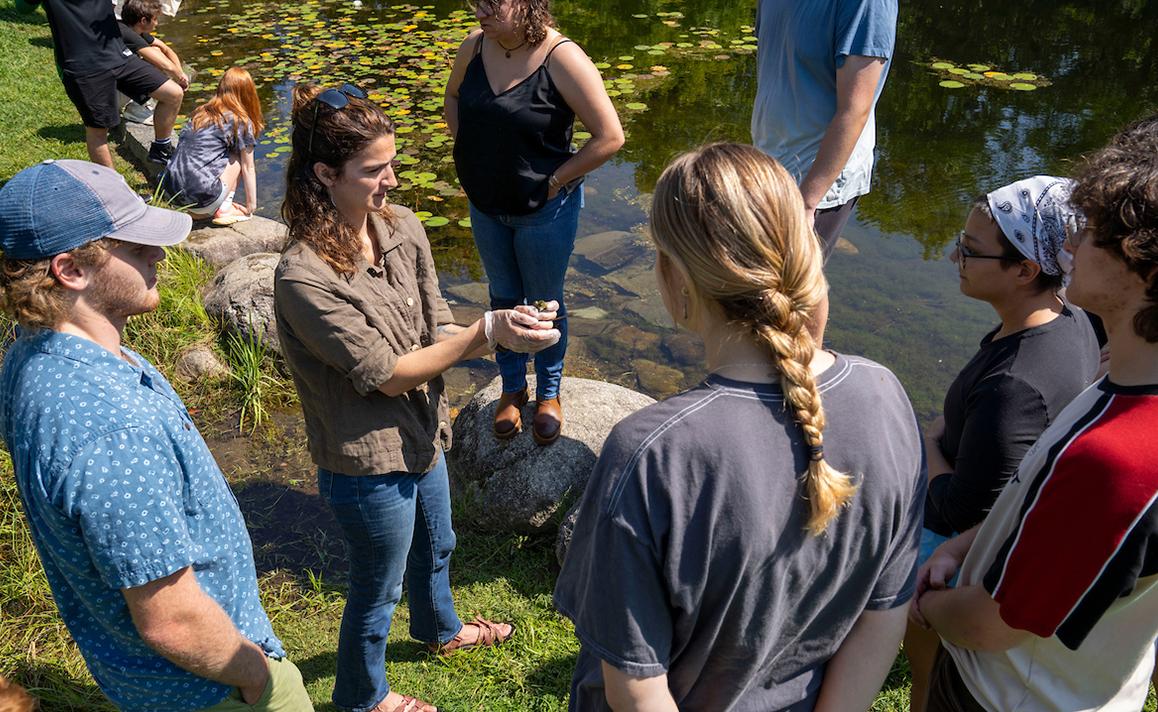
The UMS TRANSFORMS Student Success and Retention Initiative, with funding from a grant provided by the Harold Alfond Foundation, supports a developmental pathway based upon three sub-initiatives: Research Learning Experiences (RLEs), Gateways to Success (GTS), and Pathways to Careers (PTC). The Research Learning Experiences (RLE) program is a signature sub-initiative of the University of Maine […]
University of Maine System
The 4D Experience at the University of Denver
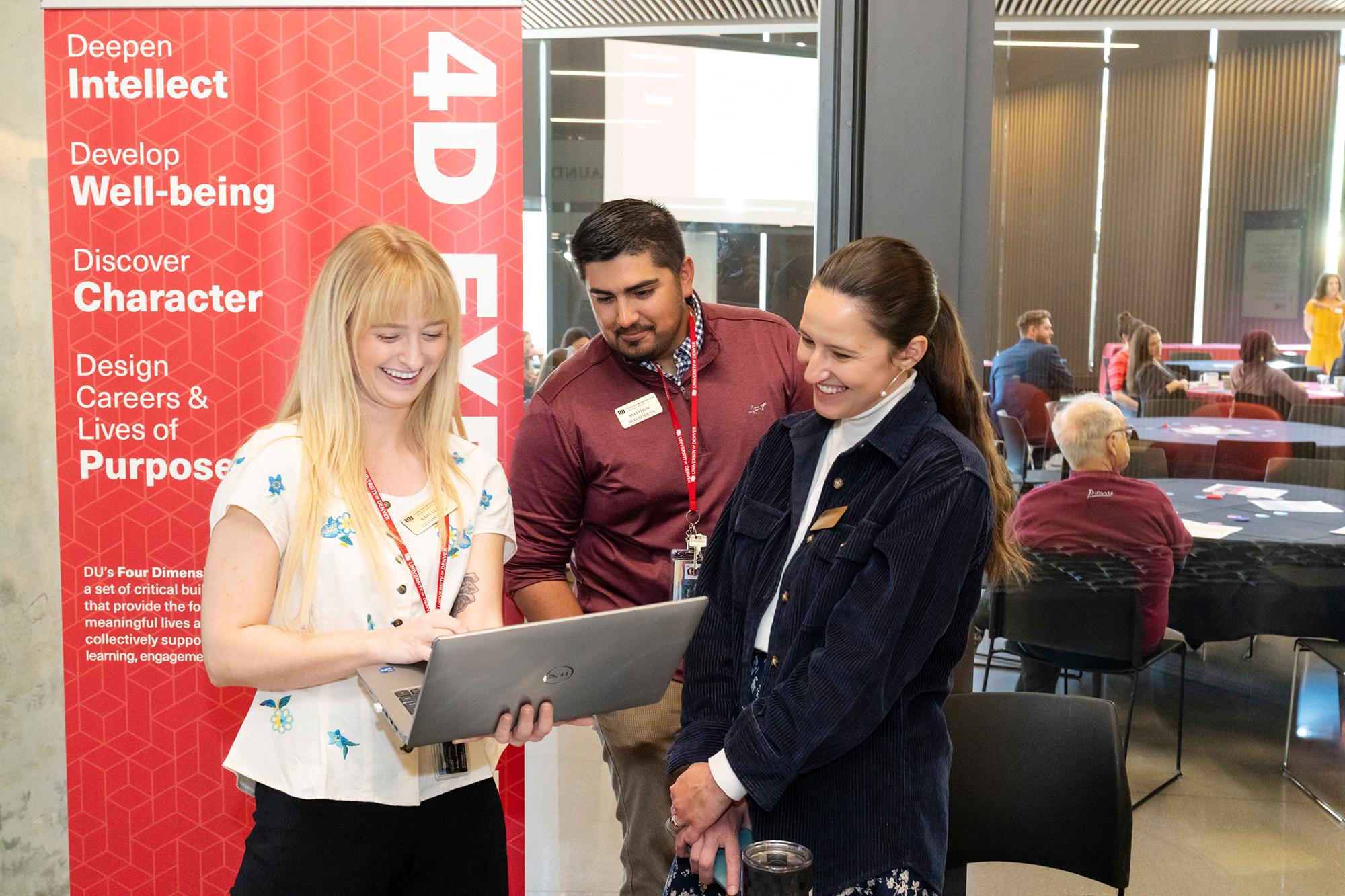
The Four-Dimensional (4D) Experience is a university-wide strategic imperative at the University of Denver that prepares students for lifelong learning, engagement, and flourishing. It does so through nurturing students’ growth across the four dimensions of intellect, character, well-being, and purpose, both in and out of the classroom. Championed by senior leadership, the initiative focuses on […]
University of Denver